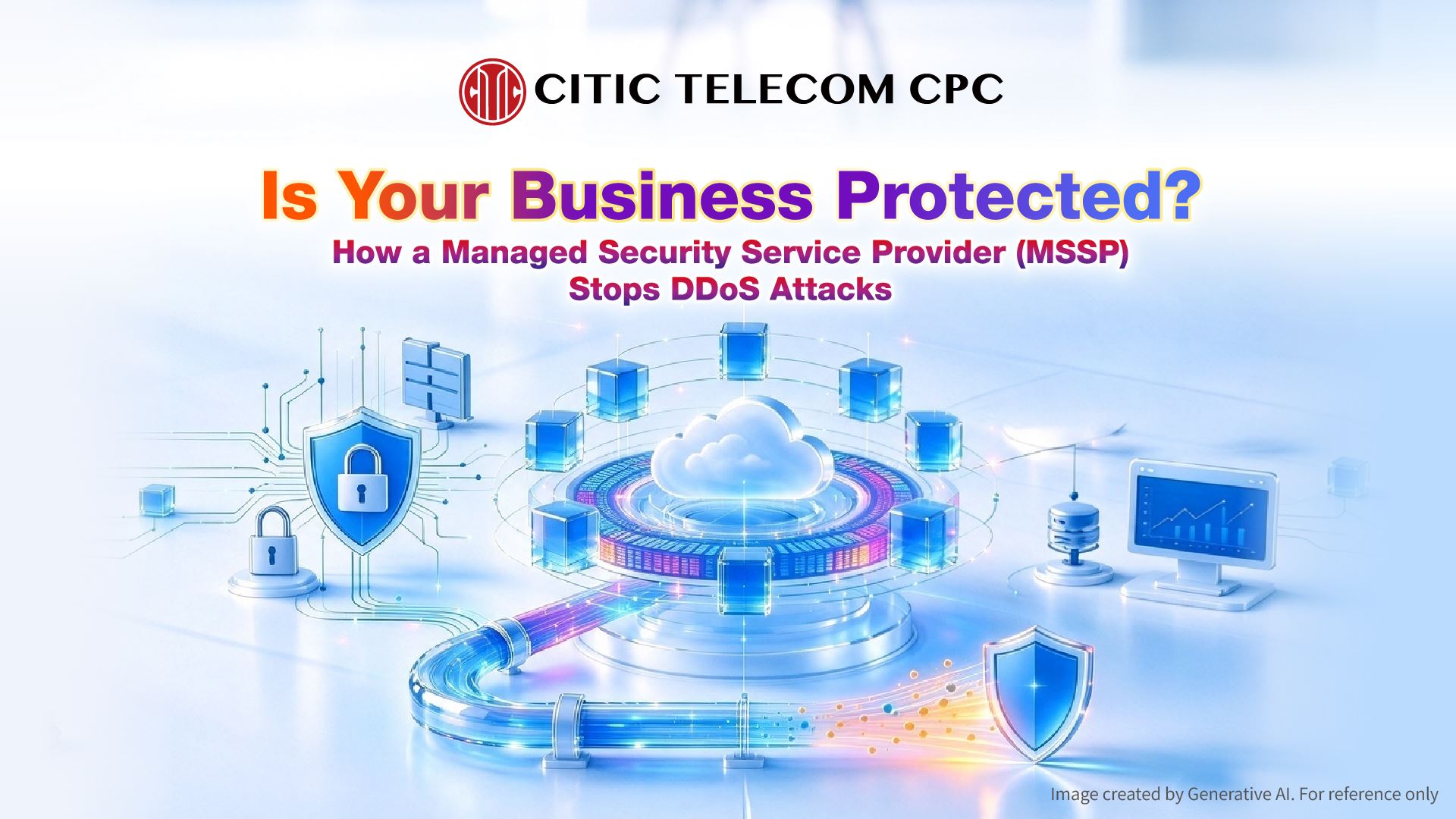
Stops DDoS Attacks")
Companies face daily website outages caused not by complex cyber attacks, but by their systems receiving excessive amounts of non-essential traffic. Businesses need DDoS protection as a fundamental security measure, on par with a firewall, for their e-commerce operations and regional banking services. The best way for businesses to achieve continuous security monitoring is through Managed Security Service Providers (MSSPs), which track client network traffic through continuous surveillance.
5 Warning Signs Your Business Needs DDoS Protection Now
If your business runs a website, a customer portal, or anything Internet-facing, you're a potential target. DDoS attacks used to be something only banks and government agencies worried about. That's no longer true.
What Happens When a DDoS Attack Hits Your Website
A Distributed Denial-of-Service (DDoS) attack creates server overloads through massive amounts of bogus traffic, which multiple sources generate simultaneously. The system fails to identify genuine customer requests from malicious attempts, causing either major performance degradation or complete operational failure. Websites experience complete shutdowns while checkout pages become unresponsive, leading to sales losses. Each minute of downtime results in lost revenue, unhappy customers, and media coverage of outages, creating permanent damage to your brand reputation. Most businesses cannot detect DDoS attacks because they lack dedicated protection systems until attackers achieve their objectives.
Why Small and Mid-Sized Businesses Are Now Prime Targets
Attackers have started using DDoS campaigns against multiple targets instead of focusing their attacks exclusively on Fortune 500 companies. DDoS-for-hire services operate at low prices, which customers can discover through basic searches, to attack small and medium-sized businesses that usually lack financial resources and security knowledge to defend themselves. If your business has not completed a security assessment in the past year, now is the time to evaluate your exposure.
4 Ways DDoS Protection Keeps Your Website Online
Effective DDoS protection isn't one single feature; it's a layered process that has to work in real time. Here's what actually happens behind the scenes when a provider is defending your traffic.
4 Ways DDoS Protection: Traffic Filtering
The first job of any DDoS protection service is separating legitimate visitors from malicious floods. This means inspecting traffic patterns, packet behaviour, and request rates to identify what's real and what isn't. The whole protection should be done fast enough that genuine customers never notice a thing.
4 Ways DDoS Protection: Real-Time Response
Speed is everything in DDoS protection. The longer it takes to detect and respond to an attack, the more downtime and damage a business absorbs. A strong DDoS protection service identifies abnormal traffic and begins mitigation within minutes, not hours.
4 Ways DDoS Protection: Scalable Defence
Modern attacks extend beyond volumetric floods to include application-layer assaults, such as HTTP-GET and HTTP-POST flood attacks, and state exhaustion attacks that stealthily consume server resources. A cloud-based DDoS defence system requires sufficient scrubbing power to handle unexpected large traffic increases without system collapse, while protecting against a full spectrum of attack types beyond standard volumetric attacks.
4 Ways DDoS Protection: Automated Threat Intelligence & Anomaly Detection
Modern DDoS protection continuously learns what "normal" traffic looks like for your business, using machine learning and constantly updated global threat intelligence to catch anomalies and zero-day attack patterns before they escalate — a level of vigilance that's simply not realistic for most internal IT teams to maintain around the clock.
Why DDoS Protection Alone Isn't Enough?
DDoS protection only works if someone is actually watching your traffic 24/7, tuning detection thresholds, responding the moment an attack starts, and confirming when it's safe to stand down. A DDoS protection tool is only a potential safeguard — someone has to operate it. And that's exactly the gap a Managed Security Service Provider is built to fill.
DDoS Protection Is Just the Entry Point
A reliable Managed Security Service Provider treats DDoS protection as part of an integrated security solution that operates alongside monitoring, threat detection, vulnerability assessment, and incident handling services. Rather than a standalone measure, DDoS protection becomes a vital component of a broader security management framework. This layered approach ensures threats are addressed holistically, not in isolation.
What Is a Managed Security Service Provider (MSSP)?
A Managed Security Service Provider (MSSP) is a third-party partner that continuously monitors, manages, and defends a business's IT environment against cyber threats, including DDoS attacks. The keyword here is "Managed": this isn't a one-time installation you set and forget. A true managed security service provider actively watches your infrastructure, adjusts defences as new threats emerge, and responds when something goes wrong at every hour of every day.
Key Differences: MSSP vs. In-House IT Team
Building an internal security team capable of round-the-clock monitoring, threat detection, and DDoS protection in-house is expensive and slow. It means hiring specialised staff, investing in enterprise-grade tools, and maintaining certifications across an ever-shifting threat landscape. A Managed Security Service Provider gives businesses access to that same level of expertise without the overhead of building it all from scratch, and often with faster deployment and lower total cost.
Beyond DDoS: Monitoring, Threat Detection, Vulnerability Assessment, Incident Response
A capable Managed Security Service Provider's toolkit typically spans vulnerability assessment and penetration testing, managed firewall and web application firewall services, endpoint detection and response (EDR), user and entity behaviour analytics, threat hunting, and formal incident response. DDoS protection sits inside that same continuously managed umbrella rather than functioning as a bolt-on extra.
How a Managed Security Service Provider Detects Threats Before They Strike
Managed Security Service Provider’s Protection: 24/7 Monitoring
Many attackers deliberately time DDoS attacks for nights, weekends, and holidays, when in-house teams are least likely to notice quickly. This is precisely the gap that continuous, round-the-clock monitoring from a security service provider is designed to close. True 24/7 protection means real people watching real dashboards.
Why Outsourcing An MSSP
MSSP Helps Cost Savings
Recruiting, training, and retaining a full in-house security operations team is a significant ongoing cost: salaries, certifications, tooling, and 24/7 shift coverage all add up quickly. A managed security service provider subscription typically delivers comparable (often superior) coverage at a more predictable cost, letting internal IT budgets go further.
MSSP Access to Certified Experts
When you partner with a security service provider, you're not just buying software; you're gaining the technical support of a full professional team. Look for providers whose security professionals hold recognised certifications such as CISSP, CISA, and CompTIA Security+, which signal a baseline of proven expertise across the technologies protecting your business.
How a Managed Security Service Provider Helps You Meet Regulations
What GDPR, HIPAA, and PCI-DSS Mean for You
Businesses need to demonstrate active security monitoring and incident response operations because regulatory bodies now demand this from them through their frameworks such as GDPR and HIPAA and PCI-DSS. Organisations face dual threats because their security vulnerabilities have become compliance issues, which now threaten their financial status through major fines.
Audit-Ready Reporting Made Simple
A good Managed Security Service Provider documents its protection. Detailed, audit-ready reporting on security events, response times, and remediation actions turns what could be a stressful compliance audit into a straightforward paperwork exercise.
4 Signs You've Found a Reliable Managed Security Service Provider
Proven Track Record
Case studies, client testimonials, and industry recognition reveal how a provider actually performs under real attack conditions.
Round-the-Clock Support
Real 24/7 protection means certified security professionals in a staffed Security Operations Center (SOC) providing continuous monitoring and expert security advice. Automated tools alone are not enough to deliver dependable protection.
Scalable Solutions That Grow With Your Business
A reliable managed security service provider should be able to expand coverage as your infrastructure, traffic volume, and risk exposure grow. It should not require you to renegotiate or switch providers every time your business scales.
Inside TrustCSI™ — A Closer Look at Managed Security in Action
To see what all of this looks like in practice, it's worth examining a real Managed Security Service Provider offering: CITIC Telecom CPC's TrustCSI™ Managed Security Services.
Multiple SOCs, One Unified Defence
TrustCSI™ Managed Security Services are backed by three Security Operations Centers located in Hong Kong, Guangzhou, and Shanghai, engineered for high availability and disaster recovery. This multi-SOC structure means monitoring and response capability doesn't depend on any single location. For businesses that need consistent protection across regions, this is a definite advantage.
AI-Powered Threat Detection and Response
TrustCSI™ Managed Security Services combine a state-of-the-art intelligent SIEM platform with AI-driven analysis which traces billions of events daily to correlate raw data, threat intelligence, and a customer's own risk profile, then generates real-time monitoring results, security analysis reports, and remediation recommendations far faster than manual analysis alone. At the core of this capability is the AI SOC, which delivers continuous behavioural monitoring, faster cross-system correlation, and coordinated incident response, empowering security experts to focus on strategic decision-making rather than manual triage.
Why Businesses Trust This Security Service Provider
CITIC Telecom CPC operates its Security Operations Centers through information security processes which have received ISO27001 certification in addition to their existing ISO9001 and ISO14001 and ISO20000 and ISO27017 certifications. The security staff members at this organisation hold certifications from CISA and CISSP and CompTIA Security+, demonstrating their expertise as a Managed Security Service Provider. TrustCSI™ MSS delivers 24/7 protection through its dedicated team of certified security professionals, backed by three Security Operations Centers and AI SOC capabilities powered by an intelligent SIEM platform — ensuring your business is never left unmonitored, at any hour of the day or night.
Your Next Step Toward Stronger DDoS Protection
Would your team know within minutes if a DDoS attack started right now? Do you have a documented, tested incident response plan? Can you produce compliance-ready security reports on demand? These questions are the starting point for evaluating your current security posture — any negative or uncertain answer signals the need for a thorough assessment of your existing defences, including DDoS protection.
Getting Started With a Managed Security Service Provider
DDoS protection is most effective when it's part of a continuously managed security strategy, not a one-off purchase. If your business is ready to move from reactive to proactive, exploring a trusted Managed Security Service Provider like CITIC Telecom CPC's TrustCSI™ Managed Security Services provides a tailored consultation to assess your current exposure and map out the right level of protection for your business. Contact us for a free consultation now!