We use cookies on this website to provide a user experience that’s more tailored to you. By continuing to use the website, you are giving your consent to receive cookies on this site. Read more about our Cookie Policy and Privacy Policy.
Our professional teams can customize business solutions and deliver excellent customer service to support our customers’ business needs and continuous growth.
As an intelligent technology-driven digitalization enabler, we are committed to providing our customers with one-stop-shop ICT solutions with superior quality.
The Financial Technology (FinTech) sector has witnessed a new wave of development in recent years. In particular, using Artificial Intelligence (AI), blockchain, and digital assets has garnered significant attention from governments and enterprises. Financial institutions actively seek cloud services, platform services, and infrastructure-as-a-service (IaaS) technologies to accelerate their digital transformation, which has also increased the challenges in protecting sensitive customer data. As the global-local intelligent DICT service partner, CITIC Telecom CPC recently organized the "Enhance Data Security in Today's Digital Finance Era" customer event, invited industry experts to explore the latest technology trends and risks in the financial sector, assisting enterprises in strengthening their cybersecurity strategy.
New Challenges in Data Management: Third-Party Assessment Embracing Future Policies
When discussing the future of FinTech in Hong Kong, Alan Chan, Consulting Partner at PwC, identified three key points. Firstly, he observed that many financial institutions have already applied generative AI in both front-line operations and back offices to improve efficiency. It will be the most heavily invested application in the next two to three years. Secondly, blockchain and digital assets have already gained attention as many countries have indicated their intention to further regulate stablecoins and tokenized bonds. Additionally, the Hong Kong Monetary Authority encourages enterprises to exchange data and establish a cross-industry data ecosystem to promote wider applications of AI and machine learning. As a result, enterprises across sectors should actively investigate the most suitable data for exchange and sharing.
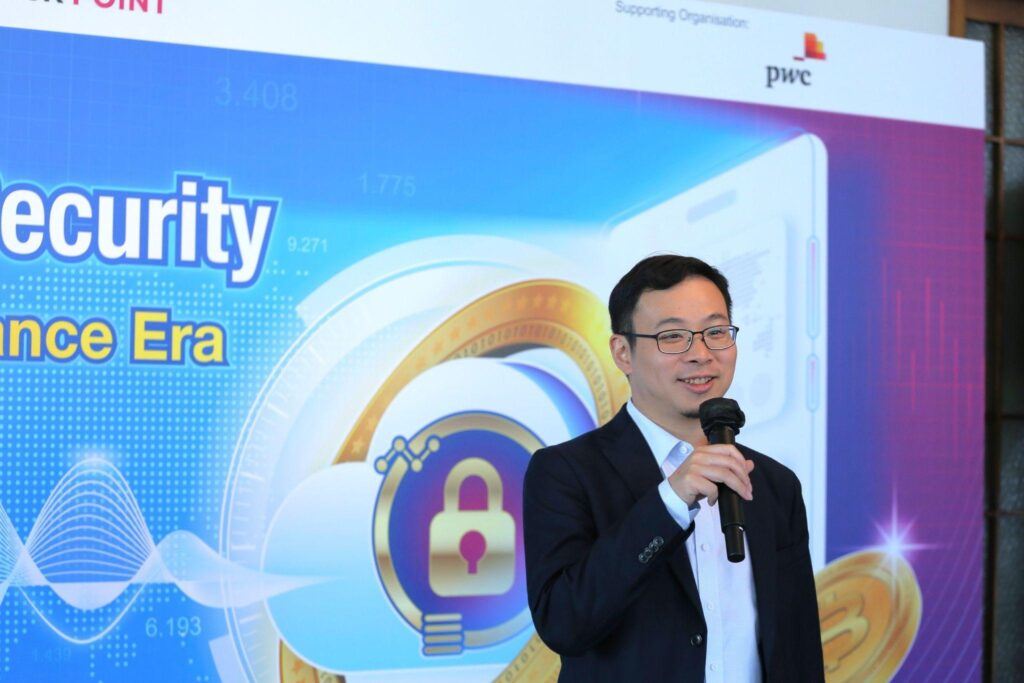
Alan Chan, Consulting Partner at PwC, mentioned that many countries have introduced new guidelines for regulating AI. Therefore, enterprises require professional assistance in planning their strategies.
However, technological advancements have also brought new challenges as stated by Alan. Data management is no longer limited to internal data. The scope of data continues to expand, leading to higher requirements for cybersecurity management. He shared that when using AI models, new regulations are needed for the selection of data sources and the training of models. Due to the lack of relevant policies at this stage, enterprises face rapidly changing policies in which internal assessments may not be sufficient to formulate the most suitable strategies. Enterprises should seek assistance from third-party organizations that can closely monitor policy changes to conduct more comprehensive quality assessments and prepare for the upcoming regulations.
Enhancing Operational Efficiency and Security with One-Stop-Shop Management
With the increased adoption of AI and big data by financial enterprises, the rapid expansion of cloud computing and online business operations is transcending the traditional boundary of data processing and storage. Enterprises are required to address cross-border networks and data management, posing more complex cybersecurity challenges. Dr. Sung Liu, Security Specialist at CITIC Telecom CPC, believes that the decentralized security solutions traditionally adopted by financial enterprises are no longer adequate. It is essential to comprehensively integrate infrastructure, networks, operations, on-premises, and cloud-based application services to swiftly identify issues, enhance service efficiency and cybersecurity, while also managing the persistently high management costs.
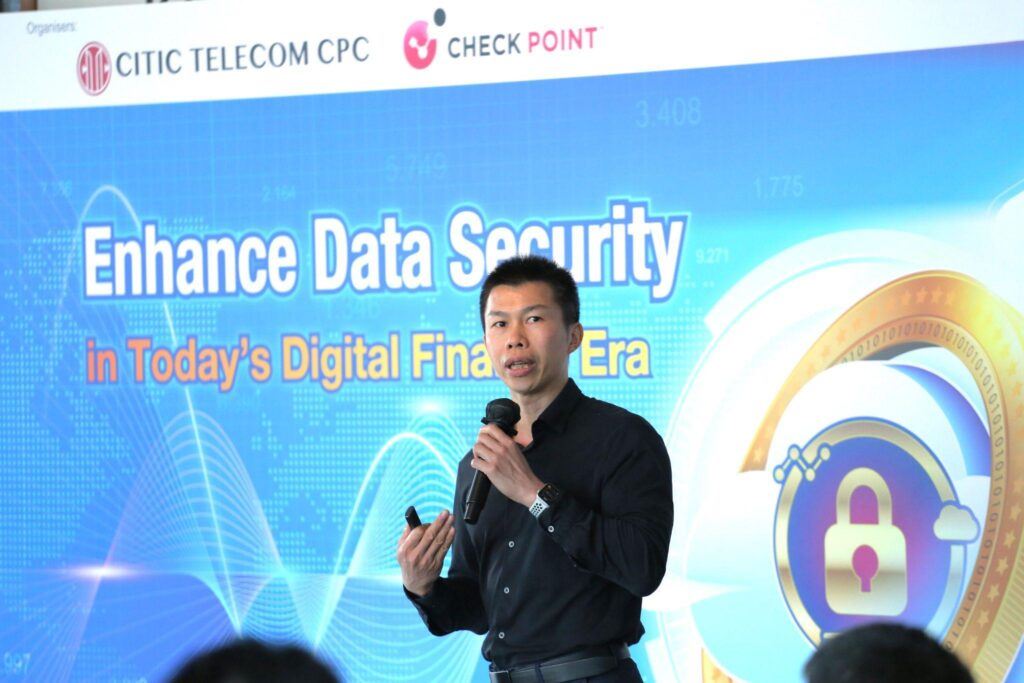
Dr. Sung Liu, Security Specialist at CITIC Telecom CPC, indicated that the ICT-MiiND strategy consists of four major pillars that can comprehensively address enterprises' needs in "cloud applications, network transmission, artificial intelligence, and cybersecurity."
Sung elaborated that a unified management platform can improve operational efficiency, data visibility and cybersecurity for enterprises compared to disparate solutions. Taking CITIC Telecom CPC’s cybersecurity services as an example, the one-stop-shop vertical management approach covering “cloud, network, intelligence, and security”, alongside its dedicated data science team, continuously develops and optimizes AI models tailored to the specific industry needs. This not only facilitates resource allocation but also delivers a more comprehensive cybersecurity protection. Sung also highlighted that as cyberattacks become increasingly sophisticated, many enterprises may lack the necessary manpower. He recommends that IT leaders consider adopting managed SOC-as-a-Service (SOCaaS) to leverage the expertise and advanced technologies of the service providers, which is more secure and cost-effective compared to relying solely on internal staff.
Improving Incident Response Efficiency with Unified Monitoring for Enhanced Security throughout the Development Cycle
Financial institutions often need to launch new services quickly to keep pace with the rapid market changes, leading to a lack of comprehensive development monitoring. This oversight can result in security vulnerabilities even before deployment, as pointed out by Siupan Chan, Security Consultant at Check Point. Particularly in today’s business landscape where digital assets are distributed across complex hybrid cloud environments, detecting issues during deployment or operation stage proves to be too late. Therefore, Siupan emphasizes the necessity for enterprises to adopt a DevSecOps strategy, incorporating security considerations throughout the entire development cycle. For instance, Check Point offers tools that assist enterprises in scanning the code of application services, achieving comprehensive supervision from source code to online operation, while ensuring compliance with regulatory requirements.
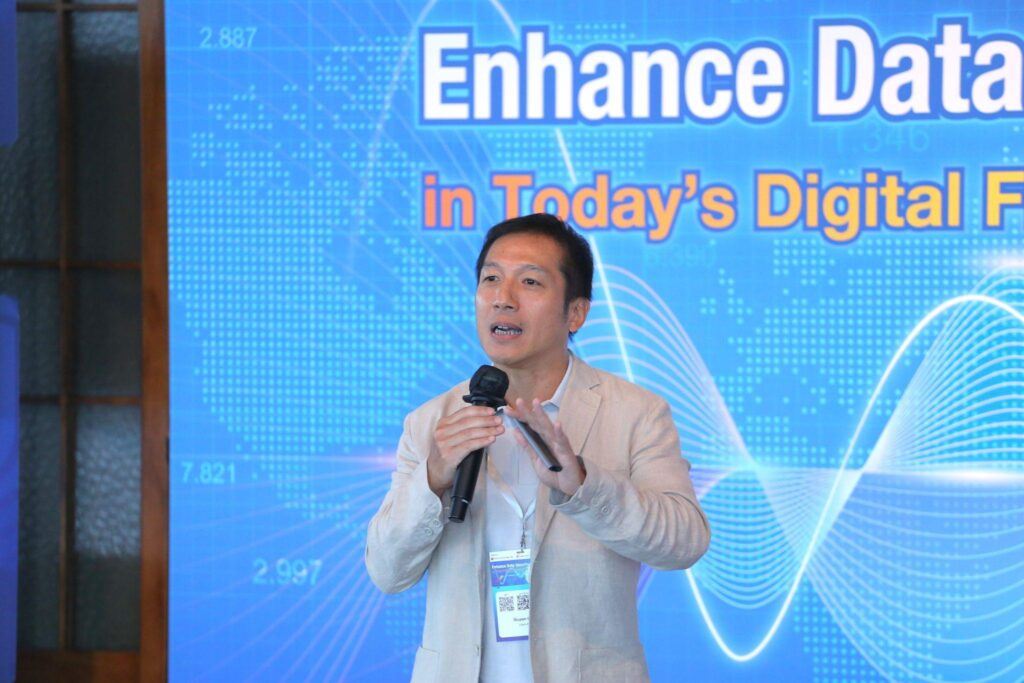
Siupan Chan, Security Consultant at Check Point, pointed out that many enterprises currently adopting independent security solutions, but lack a comprehensive approach to monitor the entire development cycle.
At the operational stage of application services, Tommy Lui, Security Engineer at Check Point, identifies a major pain point faced by enterprises is to handle the large number of security incidents effectively. He explained that the decentralized nature of the cloud environments necessitates the independent collection of security logs from various cloud service providers. When alerts are triggered, enterprises may struggle to quickly investigate the root cause, leading to delays in responding to security alerts and hindering the prioritization of critical issues. By adopting an integrated security platform and automatically analyzing and prioritizing threats based on actual risks, these challenges can be addressed, enabling prompt responses to high-risk alerts.
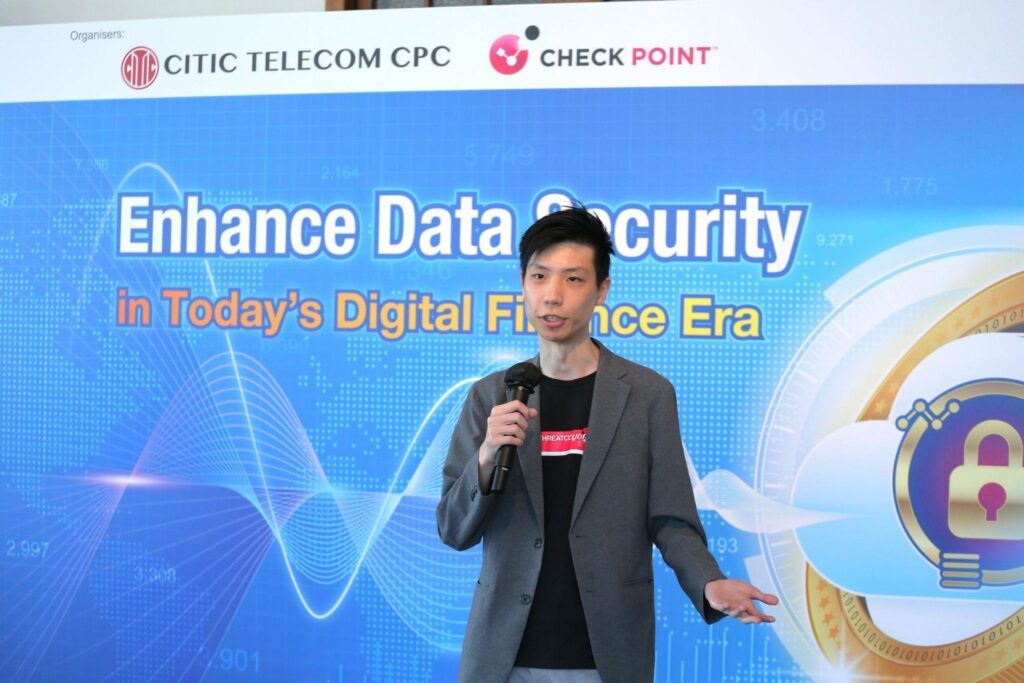
Tommy Lui, Security Engineer at Check Point, shared that the thousands of alerts are valuable information but it becomes a pain point for enterprises if they cannot be handled promptly.
During the event, four experts provided more in-depth analysis on the development of FinTech, regulatory policies, and data management challenges. To learn more about TrustCSI™ 3.0 cybersecurity solution suite, feel free to consult our team of security experts or click here.