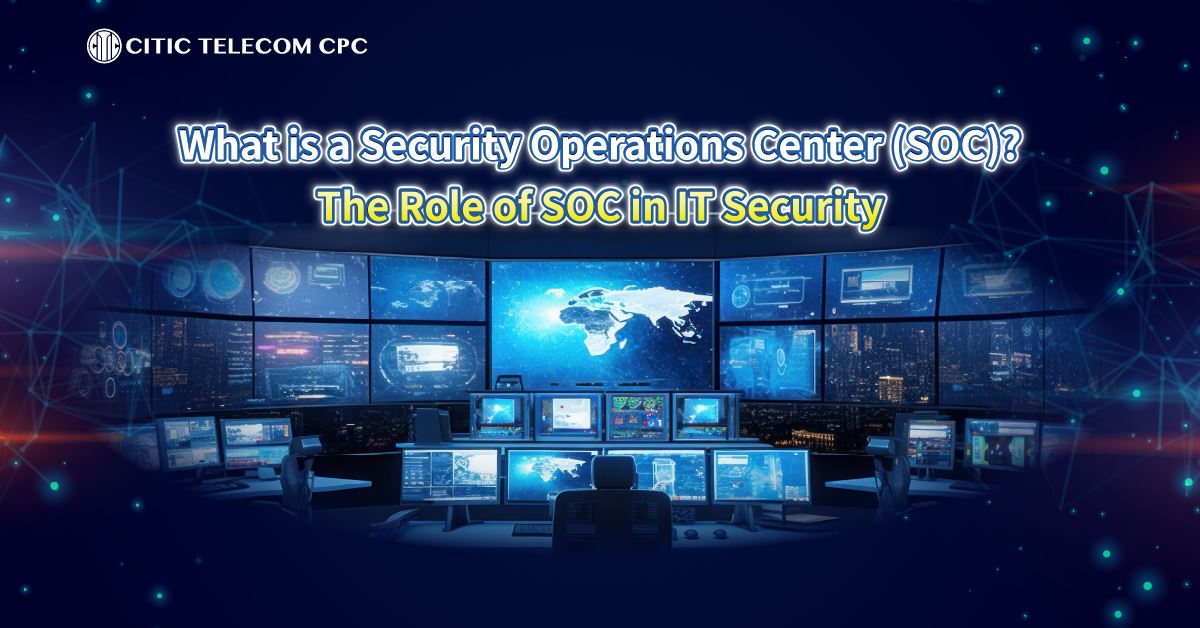
Cyber threats are evolving faster than ever. Enterprises and organizations are forced to adopt proactive defenses to ensure IT security. Security Operations Center (SOC) serves as a critical hub, enabling continous monitoring, immediate threat detection, and effective incident respsonse.
What is a SOC?
A Security Operations Center (SOC) is operated by a dedicated team of certified security professionals responsible for monitoring, detecting, and responding to cybersecurity threats around the clock. By combining advanced technology, streamlined processes, and skilled analysts, the SOC is designed to ensure IT security and provide 7x24 protection for critical digital assets, including networks, servers, endpoints, applications, and databases.
How Does a SOC Work in IT Security?
Log Collection and Monitoring:
After collecting logs from various sources, including critical servers, endpoints, firewalls, intrusion detection/prevention systems (IDS/IPS), and cloud environments, the SOC correlates events and perform analysis to identify potential threats.
Threat Detection and Analysis:
Leveraging a Security Information and Event Management (SIEM) engine, the SOC correlates and analyzes logs to detect anomalies and threats. This includes behavioral monitoring to identify suspicious activities and reduce false positives.
Incident Response:
Upon detecting a threat, SOC security professionals investigate the root cause, assess the impact, and respond to mitigate risks, minimizing operational disruption. This process includes incident triage, containment, eradication, and recovery.
Continuous Improvement:
The SOC continuously refines processes, technologies, and threat intelligence to improve detection capabilities and response effectiveness. Automation, Artificial Intelligence (AI), and Machine Learning (ML) are increasingly deployed to support SOC operations to handle alert overload and improve operational efficiency.
Why SOC for IT Security is Essential
Proactive Defense Against Cyberattacks
SOC is essential for enterprises because it provides a proactive, comprehensive defense against the ever-evolving landscape of cyber threats. Unlike traditional reactive security measures that respond only after an incident occurs, a SOC actively prevents attacks before they cause harm. By continuously analyzing patterns and leveraging real-time threat intelligence, SOC can block a wide range of attacks such as phishing, Distributed Denial of Service (DDoS), and zero-day exploits, which are often designed to bypass conventional defenses. This proactive defense effectively remediates vulnerability and helps organizations stay ahead of attackers.
Compliance and Regulatory Adherence
SOC ensures compliance with industry standards by maintaining audit trails, encrypting sensitive data, and enabling timely incident reporting. This reduces legal exposure and financial penalties, particularly in regulated sectors like healthcare, finance, banking and insurance, where SOC controls align with requirements for protecting sensitive data.
Operational Resilience
Through continuously monitoring and rapid incident response, SOC minimizes downtime and operational disruption, safeguarding IT security of an organization. Automation and advanced analytics enhance threat detection, reduce false positives, and prioritize critical risks, optimizing resource allocation and cost efficiency.
Collaborative Threat Intelligence
SOCs foster internal and external collaboration, ensuring consistent security policy enforcement and access to global threat intelligence. This unified approach strengthens defenses against sophisticated cyberattacks.
Building an Effective SOC for IT Security
Key Components of a Successful SOC
Technology: SOC leverages SIEM system for real-time log aggregation,correlation, and analysis, enhanced by threat intelligence and AItechnologies. This enables vulnerability identification, threatprioritization and incident response, improving accuracy and operationalefficiency to meet growing IT security demands.
People: The SOC team comprises security analysts (alert monitoring),incident responders (breach mitigation), and threat hunters (proactiverisk identification). The tiered structure involves: Tier 1 triagingalerts, Tier 2 investigating incidents, and Tier 3 conducting advancedthreat analysis. Continuous training and cross-team collaboration ensureadaptability to evolving threats.
Processes: Structured protocols govern escalation, investigation, andrecovery. Automated incident response plans accelerate containment, whileforensic analysis prevents recurrence. Regular audits and policy updatesensure SOC operations with emerging threats and organizational needs.
Challenges in SOC Implementation
Building a SOC is complex and costly. High operational expenses arise from acquiring sophisticated technology and maintaining 24/7 coverage. Additionally, talent shortages make recruiting and retaining skilled cybersecurity professionals difficult, often leading to burnout and turnover.
The complexity of integrating multiple security tools can also hinder efficiency. To address these challenges, many organizations adopt hybrid SOC models—combining in-house teams with Managed Security Service Providers (MSSPs)—or fully outsource SOC functions to leverage external expertise, scalability, and cost-efficiency. These approaches help bridge gaps in skills and resources while maintaining robust security monitoring and incident response capabilities.
SOC Maturity Models for IT Security: Which is the Best for Your Enterprise?
As organizations invest in SOC, accessing their maturity becomes critical. Not all SOCs are created equal—some offer only basic monitoring, while others deliver advanced threat hunting and automated response. Assessing your SOC’s maturity ensures investments align with your organization’s risk profile and business needs.
Maturity models typically categorize SOCs into different levels. At the foundational level, a SOC provides essential log monitoring, basic alerting, and manual incident response. This stage is often sufficient for smaller organizations with limited resources but offers minimal proactive defense. As maturity increases, organizations deploy more sophisticated tools and introduce formalized incident response processes. The optimization of incident response leads to significantly faster time to detect and respond to common threats, ensuring compliance and reducing business risk.
At the highest level, it not only detects threats but also predicts and prevents emerging attack patterns through proactive threat hunting and behavioral analytics. Automated workflows reduce response times and free security professionals to focus on strategic security initiatives. Mature SOCs also integrate seamlessly with cloud environments, third-party vendors, and business units, providing a holistic approach to digital risk management.
To evaluate your current SOC maturity level, consider factors such as detection capabilities, response rate, use of automation, and integration with organizational processes. Regularly benchmarking against best practices and industry standards ensures continued improvement and resilience.
In conclusion, advancing through maturity model of SOCs transforms an organization's security posture from reactive to proactive and, ultimately, predictive. Whether you are building a new SOC or upgrading an existing one, assessing and improving SOC’s maturity is essential to staying ahead of evolving cyber threats.
Future Trends in SOC for IT Security
AI and Automation in SOC Operations
Artificial Intelligence is revolutionizing how SOCs operate by enabling faster, more accurate threat detection and response. AI-driven tools analyze massive volumes of security data in real time, identifying anomalies and potential threats that traditional rule-based systems might miss. This predictive threat detection allows SOC to anticipate and mitigate attacks before they materialize.
Moreover, automation handles repetitive and time-consuming tasks such as alert triaging, incident prioritization, and initial containment steps. This significantly reduces the workload on human analysts, allowing them to focus on complex investigations and strategic threat hunting. AI-powered SOC are emerging as indispensable assistants, helping prioritize alerts, reduce false positives, and accelerate incident response workflows.
This integration of AI and automation not only improves efficiency but also enhances the accuracy and speed of security operations.
The Growing Importance of SOC Collaboration
Cyber threats today rarely target isolated organizations but often span entire industries or sectors, making collaboration essential. Breaking down internal silos is critical to enable seamless data sharing and coordinated incident responses.
On a broader scale, public-private sector partnerships are strengthening to pool insights on emerging threats, enhancing overall cybersecurity resilience. This collaborative approach allows organizations to detect, correlate, and mitigate threats more rapidly and effectively than working in isolation.
The future of SOC lies in harnessing AI and automation to enhance operational efficiency while fostering a culture of collaboration and intelligence sharing. Together, these trends empower IT security teams to stay ahead of increasingly sophisticated cyber threats and protect critical digital assets more proactively and comprehensively.
CITIC Telecom CPC's SOC Expertise: Ensuring Hassle-free Multi-location Connectivity
Based on nearly 20 years of security experience, CITIC Telecom CPC operates self-developed, self-managed SOCs in Hong Kong, Guangzhou, and Shanghai, providing 7x24 incident management. The company ranks among the few providers offering cross-regional SIEM platforms.
Supported by 20 global cloud centers and network resources, CITIC Telecom CPC delivers integrated "Cloud, Network, Security" services for seamless, secure connectivity and simplified IT operations. Its professional technical teams manage infrastructure, applications, and multi-vendor environments to ensure robust protection for its customers.
The company combines “AI-Red/Blue Cybersecurity Practices” with intelligent threat analysis to enable proactive defense and real-time threat response. Additionally, it provides tailored cross-border data compliance strategies for enterprises expanding globally or coming to China.
CITIC Telecom CPC fosters deep integration of AI and cybersecurity to help its customers achieve automated and intelligent security operations. Its professional team leverages AI to enhance customers protection, ushering SOC capabilities into the new era of AI-driven operations. The upcoming launch of the third self-developed AI-driven SIEM platform in the late 2025 will further empower enterprises to combat cyber threats efficiently while accelerating their security and digital transformation.
To learn more about CITIC Telecom CPC’s comprehensive security services and AI-powered SOC capabilities, please contact the dedicated security consultant team.